Thursday, 14 October 2010

Interview with Dave Grossman


Having been a gaming journalist for almost a year I've accomplished some incredible things. I've worked on my several podcasts for the first time, I've reviewed cutting edge games, I've spoken to some amazing people who work for some amazing gaming companies, I attended the Eurogamer Expo for the first time as press and I've been able to try games before they have become made available for the general public. However, this interview with Dave Grossman may very well be my defining moment.


Dave Grossman is currently the figurehead for Telltale Games but his past merits have seen him working for Humongous Games on the Pyjama Sam series, but also at Lucasarts on classics such as Day of the Tentacle, The Secret of Monkey Island and Monkey Island 2 Le Chuck's Revenge. In addition to that, Dave has even written some children's books for the Spongebob Squarepants series. Seeing as how I've gone on record to say Monkey Island 2 is my all-time favorite game alongside its predecessor, I think it's fair to say I was more than a little excited to have my questions answered by a man I've considered one of my gaming idols since a very young age.
In this interview, I talk to Dave about the episodic model TTG have made so successful, but also about working on established intellectual properties, new material, the Telltale Pilot Scheme and of course the recent deal with Universal to make new games based on Back to the Future and Jurassic Park!


What did Dave have to tell us? Read on to find out...


Q. Thank you so much for taking the time to speak to This Is My Joystick. I'm a huge fan of your work, both with Telltale and Lucasarts, so this is a huge privilege for me. I'd first like to ask you about Sam and Max Season 3: The Devil's Playhouse.


Since both Playstation 3 and iPad are new formats for Telltale Games, I wonder if you found the development cycle for Sam and Max Season 3 more difficult than with previous games? Do you feel they are easy formats to develop for or did the unfamiliarity impact on the seasons release?


"The platforms didn’t seem to be inherently more or less difficult than others we’ve got our engine running on. What was tricky was combining that development with all the other technical improvements we were trying to do simultaneously, using the same people. I have an ingenious plan involving cloning, a time machine, and slowing the speed of the earth to lengthen the workday, all of which should make things easier in the future."


Q. Now that you have developed for both Playstation 3 and iPad, do you feel any further Telltale franchises could find their way onto both formats in the future?


"Sure; we’ve already got Tales of Monkey Island out for Playstation, and Puzzle Agent is coming out for iPad and iPhone. What else would you like to see?"


Q. Can you elaborate on the decision not to include Sam and Max Season 3 on Xbox 360 and Wii at this time and why Playstation 3 and iPad owners were given Season 3 as an introduction to the series before releasing Seasons 1 and 2? Having played 'The Devils Playhouse' I understand that Season 3 plays very differently from the first two games, do you feel that the control layout wouldn't work with both Playstation 3 and iPad?


"I’d love to have every title running on every platform in the world, but we can’t fit enough people into the building, so we have to pick the best opportunities at any given time. So the call wasn’t “let’s not do 360 or Wii now,” it was “let’s get onto PS3 and iPad now.” We wanted to lead with our best foot, so we put The Devil’s Playhouse out first, and designed it so that it would be a perfectly fine place to start the series if you hadn’t played the others."


Q. You've been champions for episodic gaming from the very beginning, choosing digital distribution over boxed games at retail. With your name now established within the industry, do you feel that this will remain the case for the foreseeable future or can you envisage yourself utilising retail more for boxed copies of your games? I noticed you did this with the Wii versions of Sam and Max Season 1 & 2.


"Our general approach has been to do the first run of a series episodically on one or more downloadable channels, and to collect the episodes together on a disc afterwards, like you would with a season of a TV show, and sell that at retail. I imagine we’ll keep doing that, unless people stop buying games at retail altogether."


Q. You recently announced that much of your back catalogue will now be available on Apple Mac systems. Why do you think it has taken so long for games to come to Mac?


"Math. Mac has historically had a considerably smaller market share than Windows PCs do, so it hasn’t been a high priority for many developers. We, obviously, feel that the audience we’re going to reach on the Mac is large enough to be worth the effort it takes to get our games to the platform."


Q. How do you feel the launch with Mac has turned out? Are you satisfied with the results? Where can you go from here?


"I imagine we’ll keep on making Mac versions of our games for the foreseeable future."


Q. Did you ever play old school adventure games such as Kings Quest, Broken Sword and Touché? How do you feel the adventure genre has evolved since this time? Where do you see it going?


"Sure, I’ve played a few old-schoolies. The first adventure game I ever played is the one that the genre is named after, “Adventure”, which I came across in the late 1970's. Later, while I was working at LucasArts, I played some of the Sierra titles, and others, you know, checking out the competition. I found those games interesting and challenging, but ultimately very frustrating. They tended to punish curiosity with death, and they had all these puzzles where the solutions were amusing but often arbitrary and more or less impossible to figure out. It was like no one was thinking about what it would actually be like to PLAY the game. I claim no personal innocence on this point, by the way; I did write and design some games at that time which, while somewhat friendlier, are decidedly old school with some of their puzzles. I’m still apologizing to random strangers on the street for expecting them to think of hypnotizing a monkey as a rational way to turn him into a monkey wrench."


"As for where it’s going now, I see a shift from puzzle games with story to story games with puzzles, if that makes sense? The story and characters, which were probably always the most compelling part of the experience anyway, take center stage, and the challenge offered to the player is whatever best supports the moment and the scene at hand, instead of whatever makes the designer look clever. The games are also often being made less lengthy and more accessible, to fit with the busy lives of modern players."


Q. What is your favourite character from all of games made by Telltale and why?


"I don’t really like to play favorites, but I suppose if I had to pick one I’d go with Morgan LeFlay from the Tales of Monkey Island series. She’s a character with some dimensions, depth, flaws. She’s likeable but imperfect, does some good things and some bad things, and you hopefully understand why in both instances. She was a good counterpoint to Guybrush in that particular story, someone with similar enthusiasms but a very different approach, which led to interesting situations."


Q. Have any characters been influenced by Telltale employees or friends of the company?


"Monsieur Papierwaite, from The Devil’s Playhouse, is rumored to have been drawn to look like our marketing director, Joel Dreskin. As far as I can recall this is the only time we’ve done this, though it’s also true that designer Mark Darin can pull off a great Reginald van Winslow (Tales of Monkey Island) when he’s wearing the correct sideburns."


Q. Why have you only now decided to release a new intellectual property and have instead used previous, established properties such as Monkey Island and Sam and Max to build up the bulk of your portfolio?


"We have worked with a lot of established properties because it makes our job easier in some respects; we start from day one with canon that allows us to evaluate creative decisions, and anything that feels like it belongs in that canon means we’re on the right track. With a new property we have to make that stuff up as we go, which is riskier and takes time. That said, we’re all pretty gung-ho to do original properties, and the pilot program under which we released Puzzle Agent is a way for us to do just that. Expect more."


Q. You are one of the few developers to have games on almost every single gaming format out there right now. With that said, which system do you feel is most friendly and accessible to your ideas and which is the most difficult to develop for?


"Sure, being on a lot of platforms helps us to reach a wider audience, which is always nice. There’s no good rational way for me to play favorites among them; the ones we’re on are all good places for our games or we wouldn’t be developing for them. That said, when we release through our own website it means we can make all our own decisions without involving anyone else at all, so in some respects that is easiest (note that that does not necessarily mean “best”)."


Q. Have you considered the Nintendo DS or PSP as a platform to introduce your games? With Telltale games now available on the move with the iPad, do you think this is a possibility in the future?


"Anything with a download channel is a possibility. I’ve been thinking we should develop for those new smart meters the electric companies are putting in, though I think the graphics are somewhat limited on those."


Q. Do you feel Playstation Move, 3DS and Kinect will be a benefit to you? Will it have an impact on the way future Telltale games are made?


"Only time will tell. New tech is always fun."


Q. How did the deal with Universal come about? Did they seek you out, did you seek them out or was it a more mutual understanding?


"We had been talking to each other for a long time about wanting to do a project. There was a feeling that the working relationship would be good, so it was mainly a matter of settling on the right property, or, as it turned out, properties."


Q. Of all the Intellectual Properties available to you, why did you decide to go with Jurassic Park and Back to the Future? Was this entirely your decision or did Universal have a hand in what they wanted to happen?


"Certainly any such decision has to be mutual; we would neither work on something we didn’t feel was right, nor would we expect Universal to hand us whatever property we wanted without some inkling that we’d do the best job with it. That said, what we like about Jurassic Park and Back to the Future is that they’re both strong on story and character, have audiences that are still passionate after many years, and have a number of fans already employed at our studio."


Q. How will the games fit in with the timeline of both Jurassic Park and Back to the Future? Will it take the films into consideration at all, or will they be entirely new properties altogether? Can you tell us a little bit about the storyline in these games?


"I don’t want to say too much about the specifics of what we’re doing with the stories, but I will say that our general approach is to take what happened in the films as canon, and to add more to that canon in whatever way fits best."


Q. When developing Jurassic Park, are you considering Michael Crichton’s original novel at all or will your game be completely based on the films?


"We’re basing our work on the films. This has nothing to do with any judgment on the novel, by the way, it’s all about the convoluted way that intellectual property rights work; we have rights to the films but not to the book. Some of the team members who hadn’t already read the book are not going to do so for that exact reason, so they won’t accidentally include things we’re not supposed to. Anything not referenced in the films we make up on our own."


Q. Why did you not consider these games for the Telltale Episode Pilot Scheme like you did with Puzzle Agent and instead opt to produce full seasons for both games?


"The pilot program is all about taking some risk on properties that are not already established or have other potential pitfalls. Back to the Future and Jurassic Park have stood the test of time; we don’t think they’re the least bit risky and we’re perfectly willing to go ahead and devote the time, money and people it takes to produce a full season from the get-go."


Q. I'd like to take this opportunity to thank you for all of the work you've done in bringing the adventure game genre back into our homes and to commend you for the amazing work you continue to produce.


"Thanks and you’re welcome! Glad you like it; please know that we are committed to keep bringing you quality entertainment far into the future."

Wednesday, 13 October 2010

An Interview with Yuji Naka, the creator of Sonic the Hedgehog!


When you’re about to interview one of the biggest names in the gaming industry, nay, the biggest interview you’ve ever conducted, naturally, you’re going to want to make an impression. However, in the pouring wet and chilling cold of London on a Friday evening during rush hour, my plans didn’t exactly come together. As it turned out, I was almost ten minutes late to my interview with Yuji Naka (you know the guy who created Sonic the Hedgehog!) and felt more than a little bit embarrassed. Mercifully, both Yuji and his translator, Toru Sasaki still greeted me with a warm smile and were open and receptive to my questions. I only had time for a half hour slot with Yuji and mine was the last interview of the day, yet even though he was very tired and worn out, Yuji Naka was still very open and receptive to my questions.

I conducted this interview with Laurie Jones who was present throughout. This interview was conducted the day before Yuji’s keynote at Eurogamer.

RW: Firstly, I’d just like to say what a massive honour this is for me to be able to speak with you today. Your success in the industry is well known and appreciated by myself and my colleagues. Thank you for taking time out of your schedule to talk with us today.

YN: Thank you, it is no problem.

RW: You’re best known for your work with Sonic the Hedgehog and with Sonic Team and now you’re working on a brand new intellectual property with Ivy the Kiwi. With the global recognition of Sonic the Hedgehog, do you feel Ivy could attain a similar status given time? Do you feel a sense of pressure based on your past gaming catalogue?

YN: I’m in a fortunate position that I do not feel pressure and relish a challenge. This is something new and something different for me and it is my hope that Ivy is a game that many people will want to play.

RW: Where did the ideas from Ivy the Kiwi come from? How did she come to be and why a Kiwi?!

YN: The concept of Ivy the Kiwi came from an idea of having the game support the main character, not the player. I wanted it to be the players responsibility to manipulate the environment in such a way that he or she is aiding the character achieve something rather than the player being in direct control of the character. In the case of Ivy the Kiwi, the objective is for her to reach her mother. As for why Ivy is the main character, the idea was to create something cute and identifiable for players of all types and of all ages and to create something that would stick in the players minds when they’re in the game or if they are away from it.

RW: There is a lot of criticism lobbied at some of the games of today in industry regarding a lack of a story. How important do you feel it is to implement a story in a game and how have you approached this in Ivy the Kiwi?

LJ: Do you use cut-scenes to describe what’s happening in the story?

YN: We have not used cut-scenes within the game, however it has been made very clear to the player what is happening in the story and how Ivy’s quest to reunite with her mother is going. When the player completes the game, there will be a picture book available to the player so that they can view everything that has happened to that point in their adventure.

RW: That’s a very innovative approach. I like the sound of that.

LJ: Definitely! I can’t wait to play.


YN: Thank you. *smiles*

RW: Moving away from Ivy for the moment, I wanted to ask you about the recent uniting of former platform rivals, Sonic the Hedgehog and Super Mario. Considering the console wars of yesteryear, how do you feel now that both of these characters have come together in the same game?

YN: It was actually me who approached Nintendo with the idea of putting these two characters together in the game as I was well aware of the fan desire to see this happen.

RW: Oh wow, so this is all your doing? *laughs*

YN: Yes. *smile*

RW: Well it was certainly the right decision as the success of both Olympic games on Wii and DS has been incredible.

LJ: Definitely the right idea.

YN: Thank you, it is good to know I made the right decision.

RW: Continuing on the Sonic thread, considering all of the titles you’ve worked on with Sonic Team and during your tenure in SEGA, which is your favourite Sonic game and why?

YN: I loved working on them all but my favourite remains the original, Sonic 1. It was here all of our ideas came together, that we were able to realise our vision and bring it all together. This is my proudest moment and one I am happiest with.

RW: I would completely agree. I’ve replayed the games recently and even from 1991 the game still holds up incredibly well and is still addictive and fun to play. That’s a true testament to the amazing work you’ve done.

YN: Thank you. *smile*

RW: Two slightly unorthodox questions now. Firstly, why does Tails have two tails? *laugh*.

YN: *laugh* The idea of Tails came from wanting to have a flying fox as Sonic’s partner in Sonic 2. We thought long and hard and drew up many concepts but in the end saw the idea of two tails serving as a propeller for Tails to fly around and help Sonic in his quest.

RW: And why is Robotnik the only human in the Sonic World?

YN: Dr Robotnik is a slightly radical representation of all humanity and the impact humanity is having on nature. In 1991, it was a very sensitive subject to talk about the environment and while I had my viewpoint, I did not speak of it. With Sonic, I was given an opportunity to express my views in a different way and did so, showing Robotnik using pollution and creating machinery which desecrates the environment and it is down to Sonic to change his ways.

RW: I must have been blinded by brilliant gameplay to have not really read that much into it but I see that now.

LJ: This was an early ecological message in games with Sonic collecting cute animals at the end of each level. I picked that up.

YN: Yes, one of the first ecological messages in a video game I believe.

RW: Moving away from Sonic again and back to the present. You famously left SEGA a few years back to form Prope and to start working on your own ideas. I wonder though, do you still feel constraints? Do you feel you have unlimited creative freedom or do you still find you have to hold yourself back on some concepts?

YN: I was very comfortable working with Sonic Team and SEGA for many years; I was given a chance for a lot of freedom and was able to express myself a great deal within games. I find working with Prope to be similar in many ways, that being said it is different and I do feel there is more freedom available to me than before.

LJ: You can work on new licenses and new properties now and aren’t constrained to working on a single intellectual property and can exercise your freedom much more than before.

YN: Exactly.

RW: Finally, I’m going to put you on the spot and ask, why should people buy Ivy the Kiwi? *laugh*

YN: *laugh* Well, at first, this may seem to be a game that plays the same as the rest but it comes with a very different control scheme, it is something that players will not have experienced or tried before and therefore this can create scenarios that the player will not expect or be able to predict. I feel this will make the gameplay exciting and interesting for players of all types. It is my hope that Ivy the Kiwi is received well in Europe and around the rest of the World.

LJ: It sounds great.*smiles*

RW: Yes it does. Thank you so much for taking the time to talk to us today, enjoy the rest of the weekend and have a safe journey home.

YN: Thank you. *smile*

Ivy the Kiwi is due for release on Nintendo Wii and DS on October 29th

Monday, 13 September 2010

Surviving without?

Having recently moved house, after only a week, it’s become very clear to me how reliant I am on technology. More specifically, the internet. Having constant access in my parents house for ten years has been brilliant, I’ve been able to access anything I want, anytime I want. Now I’ve moved out I have to wait for a new internet subscription package to be configured, and in the meanwhile find myself floating in limbo, desperate to just randomly jump onto Google and sofa surf. Yet the luxuries I’ve taken for granted over the years are inaccessible because I’m still waiting for someone to flick the magical internet subscription button that ‘not so magically’ takes from 14 days to setup!

It’s quite frightening for me to admit but I think I do have some form of internet withdrawal. While I don’t suffer any symptoms like headaches, panic attacks, shakes or tremors, I still feel as if there is a void in my day to day routine that is distinctly missing. I know I can access internet cafes or use Wifi hotspots at anytime but it doesn’t feel quite the same as being in the comfort of your own home without restrictions on time and distracting hustle and bustle all around.

I know it won’t be long before I’m all set up, yet I can’t help but remain impatient!

How about you? What’s the longest you’ve survived without internet? Is it easy for you to be without it or do you struggle like me?

Sunday, 29 August 2010

Kinect'ing People! A hands free 'hands on'


Kinect is going to be an integral tool that introduces gaming into more households than ever before. Effectively, Microsoft have come to finish the job that Nintendo started with the Wii back in 2006. There’s no doubt about it, no matter how Sony may think otherwise, Kinect is going to be the present everyone wants this Christmas and after trialling it, it’s not difficult to see why. Anyone can jump straight into Kinect, stand in front of the camera and be a part of a game. It’s as if gaming is being started from scratch and everyone is being forced to adapt.

Good or bad, I find out if Kinect really is the future.

During my trial, I played with two people who aren’t extensive gamers alongside myself and my girlfriend who play games on the Xbox regularly. When both my girlfriend and I were playing Joy Ride with our friends, we got slaughtered, every… single… time. No matter how many successful laps of Forza I’ve had in the past, no matter how many times I’ve whipped around the cities in Project Gotham or propelled ahead at high velocity in Gran Turismo, Joy Ride still had lessons to teach me. I came 8/8 during every race I played and I’d even learned how to do boosting and stunts in mid air. Clearly, previous involvement with games of a similar ilk has no bearing on your capabilities within Kinect games. From my experience, it actually seems that non-regular gamers found it easier to adjust than those of us who are used to controllers. Our posture was all wrong and we were a little rigid, as we are too used to having a prop to focus our intensity on. i.e the controller.

When you first play Kinect, especially if you are a regular gamer, you’re going to be very surprised by how important every aspect of your body is to your own individual progress within a game and your general success rate. Having only trialled three of the games in Kinect Adventures, and Joy Ride, I didn’t get to see everything Kinect can do, but have enough perspective now to see just how important this will be to the way gaming will be played from this point forward. The slightest twitch of your leg, or the force you put behind the swing of your arm, is all crucial to your performance. In River Rush, you can have up to two people playing, each at either side of the raft, and you will need to use teamwork in order to maximise your points; both steering the raft by moving your bodies and jumping in order to reach the Adventure Points. Whereas, in Ricochet, a dodgeball type game, you will need to use every part of your body in order to perform at your best.

While there will be Xbox Live support within certain titles, Joy Ride will enable you to have eight people playing over Xbox Live at one time, the focus of Kinect will be in your living room. In an age where online gaming dominates the multiplayer market, Kinect looks set to bring the party back into your own home and that’s why this Christmas, finding one of these is probably going to be very difficult, but worth the trouble!

Kinect is going to open doors wide for the future. Anyone who has not necessarily been into gaming before is suddenly going to be given a rich opportunity to embrace it as never before. Casual gamers will be in the same boat as those who take pride in being labelled ‘hardcore’ and it will now be possible for people with handicaps and ailments to ascend to gaming greatness and compete with others on an even playing field, something which has never been possible until now. In that regard, Kinect is truly revolutionary.

It’s easy to see why some would be annoyed by this abrupt change in the gaming landscape, players have been used to using a game pad for years, adjusting to directional buttons or analogue sticks for movements and the tap of a button prompting a character to jump or punch. With Kinect, the individual has become the controller and every action is determined by the way you move your body. Suddenly, it’s all about dexterity, flexibility and endurance as opposed to who can button mash the fastest.

Some may argue that Kinect offers too much freedom and that developers aren’t going to make full use of the capabilities. I wonder whether the five year lifespan Kinect has been given will be enough time for developers to truly get an idea for what can really be done with the technology. It’s worth noting that Sony’s Move is being supported by most of Sony’s forthcoming A-List franchises (such as Killzone 3, Motorstorm Apocalypse and Little Big Planet 2), whereas Microsoft have yet to associate any of their key franchises with Kinect, with games initially announced or rumoured to feature Kinect support no longer receiving it. Don’t they trust their multi-million dollar project with their multi-million dollar game franchises? Do they think people wouldn’t play them? As I previously alluded, people who weren’t gamers before can suddenly become gamers; shouldn’t they get a chance to be competitive in the games that people class as ‘hardcore’, or would Kinect support cheapen the experience?

All I know is that my hands-on with Kinect was an eye-opener. Microsoft have created something fun for everyone, something that will make non-gamers interested and want to get in on the fun too. However, it may have some way to go before it proves to the fence sitters and the doubters that this is a revolution, that it is the next step and that it is as important to their gaming collection as anything that may have come before it.

Monday, 23 August 2010

Ahead of the Game?


Is there such a thing as being ‘too ahead’ of the game? Sony may very well have stumbled across that issue with the release of Playstation 3 almost four years ago. They bundled a Blu-Ray player with the console, but at the time of its release everyone had only just fully converted from video to DVD and the value of DVD’s had dropped to an affordable level. There was a comfortable balance established by the consumer and the market for the first time in several years. Then Sony won the HD war against Microsoft, who had bundled the HD-DVD with the Xbox 360, and so High Definition finally made an impact into the home market. Unfortunately, at this point, Blu-Rays were top flight prices, and normally for old films that have been remastered, and High Definition wasn’t really important enough to people to make them consider the switch. So what were Sony left with? An overly expensive console with a limited batch of games and a market that wasn’t quite ready for the next gen. Sony really suffered with this, losing millions hand over foot, putting them on the back burner from the get-go and allowing Microsoft and Nintendo to curry more favour with consumers. It’s only recently that Sony have managed to turn a profit on their system and that Blu-Ray is finally starting to get people’s attention.


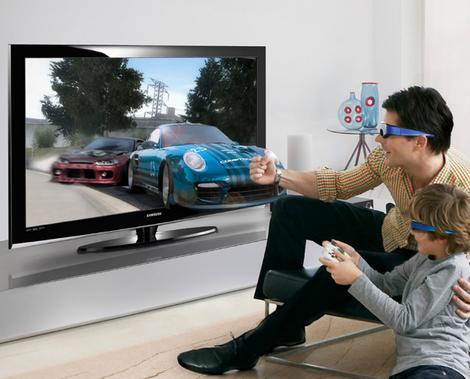
However, just as Sony have finally put themselves back in the race, they almost seem ready to take themselves out again. In fairness, this time it’s a bit different as the Playstation 3 is in more homes than it was at launch, but with the announcement of a 3D patch to support most upcoming games, PS3 owners without a 3DTV are once again not going to benefit from the full Playstation 3 gaming experience. Before I go further, this isn’t related to Move, as that’s a separate entity altogether and is at a much more affordable price point. However, with 3D television only just coming onto the market, and at such a hefty price, are Sony trying to push us into the next generation too quickly, again?


When you consider that 3D has only recently become a sustainable trend, especially in cinemas, I believe that all of this is happening too fast. I’m not saying I’m not one for change, and that I dislike how things develop and evolve, but I still think the home market isn’t quite ready for the changes Sony are fixing to make such an important part of their feature system. When you consider the IMAX cinema is still very much in its infancy and is only in select parts of the World, with many people still not even sure what it is, many people are still happy to see a film without the embellishments. Also, a lot of people have only just fully converted to the High Definition Television and gotten used to being Digital Ready within the last year or so. Is this really the best time to tell them that it is already "old", and to keep up with technology they are going to have to spend more of their hard earned money?


There’s always been a market for the consumer with the money to afford the ultimate home experience. Before flat screen TV’s became the norm for everyone, you can bet that they were in select homes around the World being experienced by those with the money to back it. The same is true of 3D televisions, as I’m sure by now several people out there are enjoying their 50" Sony televisions and watching Eastenders with big beefy glasses on their head, whereas everyone else is probably making do with a 32” and is quite happy thank you very much.

And what about those who are said not to be able to experience 3D at all? The 12% of Britons who apparently can’t ‘see’ 3D. Does this now segregate and isolate them? Will they be left out in the cold in these plans? Just as perhaps the gaming pad of old isolated some people from playing console games and now Wii, Kinect and Move opens those doors, so 3D gaming could be about to slam the door shut in the face of another set of consumers. Such as is the case with technology undoubtedly, but it raises an arguable point.


I feel that Nintendo have learned from their previous mistakes with the Wii and motion control and are approaching this appropriately, making a self-contained 3D handheld system where you can switch the 3D effects on and off and bringing it out at an affordable price point. Frankly, I don’t think some people are even sure if they’re ready for 3D or not, or whether they want it to become such a big part of their lives. Nintendo are at least making a handheld system that provides those capabilities but also enables you to turn it off and play as normal without the need for a super expensive rig in order for it to work. With a few years experience of this, it’ll finally give people a chance to see whether or not this is appropriate for them. Nintendo at least appear to be giving people a choice and phasing it in gradually, whereas Sony are already making big plans to include it in their feature line-up of games heading into 2011. At present, they’re only utilising it with a limited library, but imagine when the library gets bigger and the releases are on a larger scale, how much promotion can we expect?


Especially when you consider the likes of Killzone 3 and Motorstorm Apocalypse, two of Sony’s feature titles, are making it an important part of the gaming experience.


It's also quite interesting to note Microsoft’s strategy doesn’t involve 3D gaming as yet and they’re being a lot more relaxed with it and allowing it to ‘progress naturally’.


With Sony being ahead of the game on this, they will have time to refine and tweak the technology to the best possible configuration when everyone else is ‘ready’ to get on board. In the meantime though, this smacks as more of an effort to bleed money out of the consumer rather than to release at a time more appropriate to them and to just deprive them of the absolutely best way to experience their Playstation 3 titles; something they probably felt assured they had when they got their HDTV set up.


Perhaps it’s me that’s behind the times, and I’m struggling to keep up with these rapid changes to the World of technology... When you consider how quickly things are replaced and are updated, perhaps I’m just more out of the technological loop than I care to admit. However, I don’t think 3D has had enough chance to blossom and prove itself to people to be a worthy enough purchase. Need I remind you that 3D was tried in the 80’s and it flopped massively. Granted, technology has evolved immeasurably since, but it’s worth noting that this isn’t the first time developers have tried to make this work.


Right now, 3D is just a fun gimmick that is available to more people than ever before, and that’s fantastic. You can go to the cinema anytime you want, wear those goofy glasses for a few hours and go home at end of play. But is the World really ready for that in their living room, can we deal with the extensive, intensive use required for a computer game or your regular stream of television programmes?


Do you think the future is being rammed down our throats too fast, too soon?

Thursday, 15 July 2010

All In One


Are all-in-one devices really such a good thing? For example, when you look at the BlackBerry, you have a piece of hardware that can make phone calls; text friends; play music; play movies; make movies; view and take photos; allow you to use instant messengers, or even BlackBerry’s own messenger service; you can play games; you have an alarm clock; you can surf the internet; download applications, with a whole wide variety of uses, such as Twitter and Facebook, and predicting the weather; they can be used as a GPS; to view your emails; and more.

All of these aspects are contained in one model, which is completely revolutionary and convenient, for certain; something that would have been impossible 10 years ago. Now, suddenly, all of these concepts can be rolled into one package, when before you’d have to have buy a piece of hardware for each of these things individually, or that only contain one or two of the capabilities listed above. This is obviously down to the Japanese mentality of economical electronics, the smaller the better and it’s quite surreal to think that you can fit 16gb on a tiny chip that can power these phones, when back in the 70’s, the same amount of memory could only be fit on a computer about the size of a four bedroom house.

Of course, this begs the question: are all of those aspects really working to their full potential? Surely, when you’re combining all of these factors into one, something is going to suffer. So while the camera may be 5 mega pixels and top of the range, the GPS is only sub-par and only knows a limited amount of routes. Something will have to suffer somehow and it's down to individual priorities as to what is going to be best for you.

And how about when the model is being asked to do too much and it caves under the pressure? It’s difficult for people to realise that such a small piece of technology being used for all these things isn’t going to be as powerful as a laptop or desktop computer, even though it may feel as if you can do exactly the same things on the move as you can at home. It’s so easy to go past the threshold of the model and really try to test it to see what it's capable of, which isn’t necessarily a good thing as that’s when the lag sets in!

Then you’ll notice how quickly battery life just gets zonked because of all of these data intensive applications. Suddenly, you’re having a device that, if it’s used pretty extensively (which is certainly easy to do when you’re combining all of these factors into one), is going to expire in a days worth of usage. This is a natural progression and will certainly be improved as technology moves on, but, for now, it’s quite easy to keep playing with your smartphone until it gasps its last breath and then it randomly conks out in the bus station and suddenly you’re unable to be contacted.

And what about if it packs in? What if the software corrupts or the phone overheats? Suddenly, I lose all of the features that I’ve structured my life around and it’s like I’m missing a third arm or a vital organ. My software recently corrupted on my BlackBerry and I’ve never felt so empty without a piece of technology dying since my Xbox RRODED back last year! I felt completely lost when I didn’t have it to refer to, as I’m regularly sending emails to friends and people I work with on This Is My Joystick, and frequenting the staff forums on the site to keep up to date, or I’m on BBM with my girlfriend or I’m reading Twitter and typing up my daily ramblings. I’ve always got something on the go.

Of course, it's not just the BlackBerry that is capable of multitudes of features; you’ve also got the brand new iPhone 4, which uses all of those features I’ve mentioned above and has its own operating system. Then you’ve got the Google Android, completely driven by applications and again capable of a good majority of all of the aforementioned, as well as the Windows Phone which uses a variation of Windows, complete with all the software you’d expect from Microsoft’s leading OS and connects to your Xbox Live account!

I adore my BlackBerry and can hardly imagine my life now without it, or without a phone capable of similar things, but I am finding myself increasingly frustrated with how quickly I need to charge it, which definitely can’t be good for the model at frequent intervals and will surely lead to a shorter shelf life down the line. Also how much my phone struggles to respond to me when I take advantage of the multi-tasking promoted to me on the tin. Perhaps I over-exert this new technology, perhaps I’m impatient or I expect too much, but, to me, the technology we desire and the technology that is currently available on the market still haven't come together in complete harmony.

Do you think technology has caught up with the rest of the World just yet and enables us to have the convenience we crave?

Tuesday, 13 July 2010

How we say hello

Perhaps it’s just me, but just the other day I observed how much the text message and instant messaging has taken over the telephone call as the favoured means of communication. Generally, I people watch whenever I’m on the bus, by day or by night, and, more often than not, I notice people furiously tapping away at the keypads on their phones much more than they’re talking into a plastic brick next to their ear.

Perhaps it’s because people like to keep things more personal and there’s less chance of their business being exploited when someone can’t earwig a conversation; perhaps people are more conscious that a phone call could disturb someone at a time less convenient for them, whereas a text message can be answered at any time; or maybe it's because a text message is quicker and they don't want to be stuck on a long conversation.

It could also be down to the growing concerns of the use of mobile phones. While nobody has been able to link health concerns to mobile phone usage completely, a recent study carried out by Dr Tony Jewell advised people to use a hands-free kit where possible and to keep conversations brief. The Welsh Assembly Government (WAG) said two bilingual leaflets are available online that offer advice on mobile phone use and have been devised with the combined efforts of health professionals and children. With all of these growing health concerns, it makes me wonder whether some people afraid to use their phone for anything apart from texting?

Whatever the case may be, it’s certainly food for thought.

Texting wasn’t even going to be part of today’s line-up of mobile phones and was used as more of a communication tool between authorities and agencies when mobiles were in their infancy. Nowadays, however, it seems almost impossible to imagine a handset without some means of texting and would probably result in the handset being marched back to the shop, receipt in hand, demanding money back. Even instant messaging has joined texting on mobile phones and enables people to access GChat, MSN, Blackberry Messanger and more when on the move, at the touch of a button.

Generally, I’ve noticed that those who tend to actually make phone calls are older people who have probably been brought up with only the home telephone, and not mobile phones, and are still unsure of how this ‘texting malarchy’ actually works. I'm not necessarily suggesting all old people make phone calls and never text, but, in my experience, they seem to be in the minority.

I must confess I’m a texting man. When I was much younger I used to talk to a school friend on the telephone for two hours at a time on a regular basis, even though I would have seen him at school the same day and would have been talking to him there as well. Now, if I tried to do that, I’d complain my ear was hurting too much and I’d be itching to play a game, watch a DVD or do some writing.

The last time I used the phone extensively was nearly two years ago, when I was first dating my girlfriend and we were in the ‘getting to know you’ stage where we would stay up late, talk about our likes and dislikes, throw a flirt in here or there and generally have some fun. Nowadays, I’m lucky if a phone conversation lasts more than a minute and, if it does, it’s usually if I’m on hold with a company or I’m taking a marketing survey! It’s not unusual to me though, as I always found I could articulate myself better with the written, rather than the spoken, word. Yet some would argue it takes a lot longer to type something you could simply say in a second.

In has been said that people are writing less these days, but that’s not entirely true. People may not be structuring articulate sentences filled with flair and pizzazz, but they are still writing, even if it is in a much more condensed and confined way.

Where do you stand? Are you a texter or a caller?